Aluminum Mig and Tig Welding
Choose Certified Aluminum Welding SERVICES
Need top-tier aluminum welding services in Toronto or the GTA? We deliver expert Aluminum welding for residential, commercial, and industrial jobs right at your location. Fast, precise, mobile. Get your aluminum welding services done right the first time
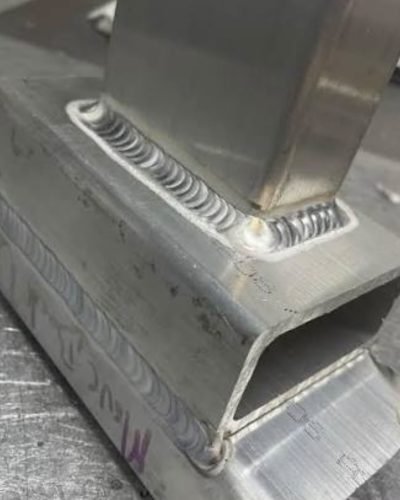
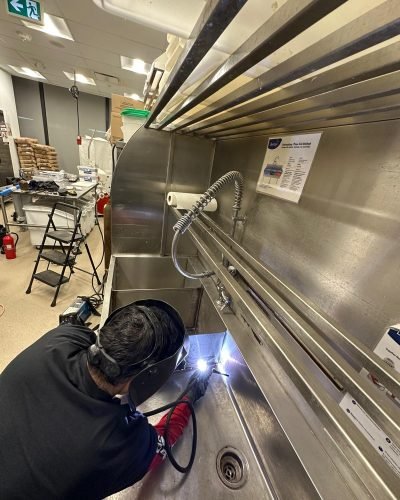
What is Aluminum Welding?
The most common metal and element, after silicon and oxygen, is Aluminum. It is very resistant to corrosion and has a low density. The manufacturing and aerospace sectors frequently weld Aluminum because of its special mechanical qualities. This includes features like lightweight, durability, and corrosion resistance. To produce a good and flawless outcome, Aluminum welding has some special difficulties, nevertheless.
Given their affordable prices and outstanding strength-to-weight ratios, Aluminum alloys are employed in transportation applications. They are appropriate for further uses as they also provide conductivity and resistance to corrosion.
Despite their generally low strength, certain complex alloys can exhibit mechanical qualities comparable to steel. The best methods for connecting Aluminum alloys must be determined in light of their many advantages.
Why Choose Us for Aluminum Welding Services in GTA?
- Mobile Aluminun Welding Anywhere in the GTA: From Toronto and Mississauga to Brampton and Scarborough, we bring our fully equipped welding unit directly to your site.
- Certified and Experienced: Our team is CWB-certified with over 20 years of hands-on welding experience, delivering high-strength aluminum welds that last.
- TIG & MIG Welder: We handle everything from delicate aluminum parts to thick aluminum structures using industry-trusted TIG and MIG aluminum welding techniques.
- Repairs, Custom Fabrication & Aluminum Works: Cracked frames, broken gates, damaged parts — we repair, fabricate, and customize with unmatched accuracy.
What are the Benefits of Aluminum Welding Services in GTA?
Excellent weld quality, adaptability, low heat input, a clean and tidy process, and the capacity to work with thin materials are just a few benefits of Aluminum welding. It makes it possible to precisely regulate the welding settings, which improves the quality of the weld and arc stability. The method may be used in a variety of industries and is compatible with a broad spectrum of Aluminum alloys.
By creating a focused heat source, welding reduces the possibility of thermal deformation and improves the dimensional stability of welded components. Because it employs a non-consumable tungsten electrode and creates clean welds with no spatter or fumes, in some situations, this eliminates the requirement for filler wire. This produces neat weld beads that save time and effort, requiring less post-weld cleaning.
Aluminum welding is an excellent option for lightweight, thin Aluminum structure fabrication in electronics, aerospace, and automotive sectors because it can work with sensitive materials without creating severe distortion or burn-through.
Frequently Asked Questions:
What is Open Web Steel Joist (OWSJ) reinforcement?
OWSJ reinforcement involves welding additional steel members, plates, or stiffeners to existing joists to increase load capacity, correct structural deficiencies, or meet updated engineering requirements.
When does an OWSJ need reinforcement?
Reinforcement is typically required when adding rooftop HVAC units, solar panels, mezzanines, conveyor systems, or other equipment that increases structural load. It may also be needed if inspections reveal joist damage, corrosion, deflection, or fatigue.
Can reinforcement be completed without shutting down operations?
In many cases, yes. Experienced industrial welding teams can perform reinforcement work in active facilities using phased scheduling, lift planning, and safety controls to minimize downtime and disruption.
Is engineering approval required before reinforcing steel joists?
Yes. A structural engineer should assess the existing joists and provide stamped reinforcement drawings. This ensures compliance with building codes, load calculations, and safety standards.
What reinforcement methods are commonly used?
Common methods include adding angle iron or channel stiffeners, welding reinforcement plates to chord members, installing web member bracing, or upgrading connections to improve load distribution. Laern more about OWSJ vs I-beams in structures.